
The Thirsty Travellers are on a mission to visit the world’s most remote destinations, with our latest adventure taking us to the Marquesas Islands in French Polynesia.
Getting to the Marquesas from Sydney was an epic journey that involved flying via Auckland to the capital of the Society Islands, Papeete, followed by two days of open-ocean sailing.
But trust us, it was worth it!
Located northeast of Papeete, the Marquesas are spread over 12 islands, of which only six are inhabited: Nuku Hiva, Ua Pou, Ua Huka, Hiva ʻOa, Tahuata and Fatu Hiva.
While two domestic airlines fly directly to Nuku Hiva from Papeete, and small planes and boats operate inter-island services, a cruise is the easiest way to explore the region.
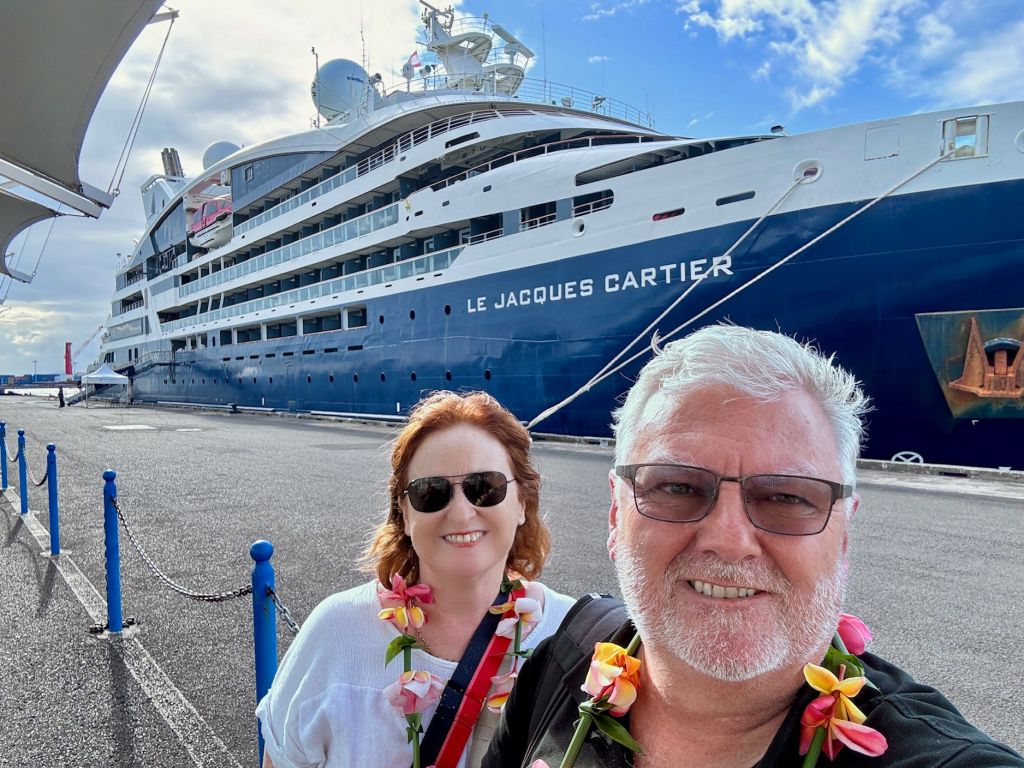
We joined Ponant’s Le Jacques Cartier for a 15-night cruise that included visits to all six inhabited islands, with the ship breaking the long journey in both directions with stops in the Tuamotu Islands.
Unlike the Society Islands (such as Tahiti, Bora Bora and Moorea) and the Tuamotu Islands (such as Rangiroa, Fakarava and Makatea), the Marquesas don’t have fringing coral reefs. Instead the archipelago is known for its black sand beaches and craggy peaks. That means swapping your snorkelling gear for hiking boots, jeep rides and wildlife spotting.
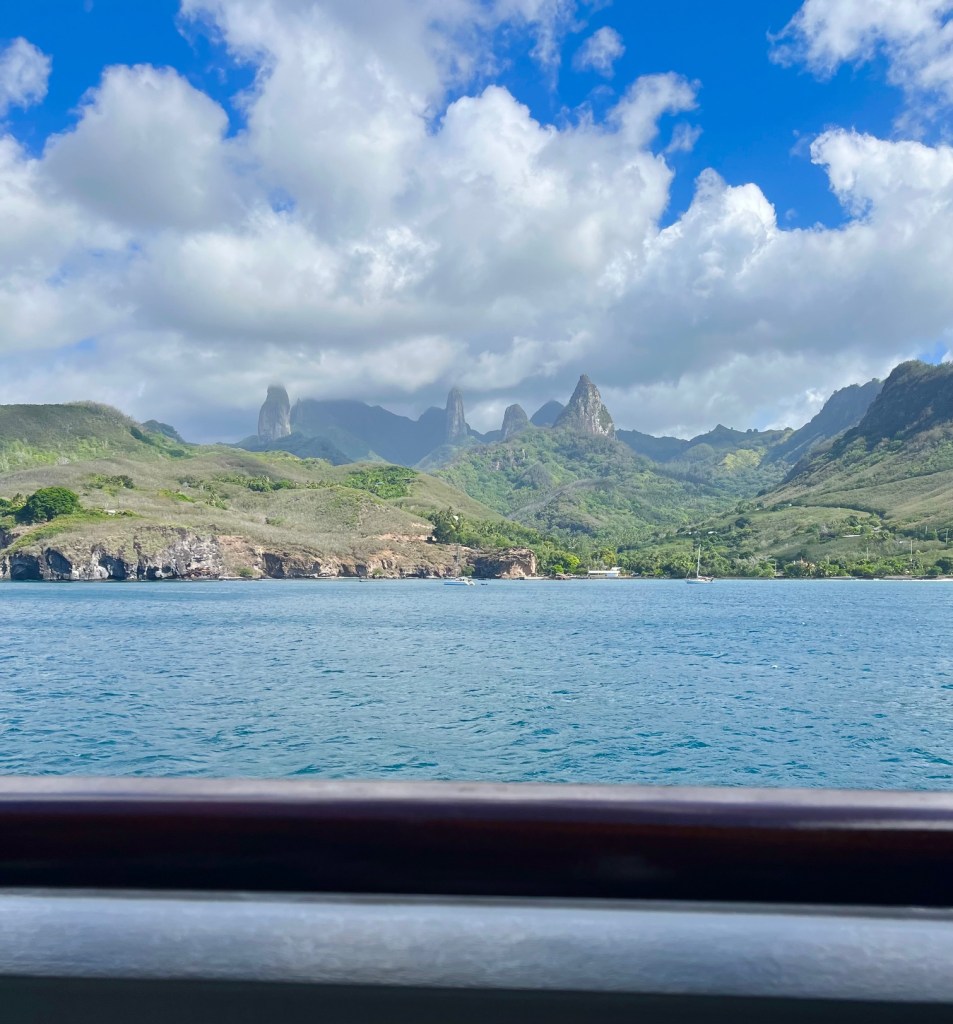
We caught our first glimpse of the Marquesas archipelago on day six of our cruise—after swimming with humpback whales in Moorea, exploring the fascinating former phosphate mining island of Makatea and snorkelling at The Aquarium coral reef in Rangiroa—when the cloud-shrouded outline of Ua Pou appeared in the distance.
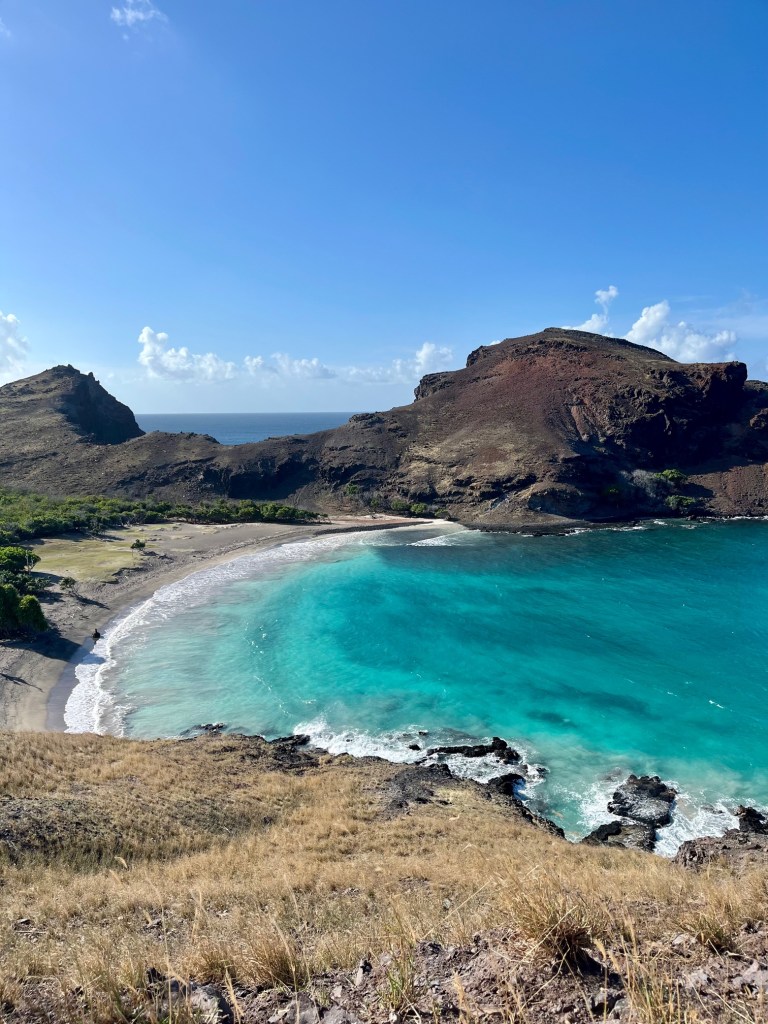
Ua Pou is the third largest island in the Marquesas and is home to around 2000 people. Many of the local fishermen and farmers took the day off work to drive us around their beautiful island, including stops in the main town of Hakahetau and Shark Bay, a natural nursery for more than 20 different types of baby sharks.
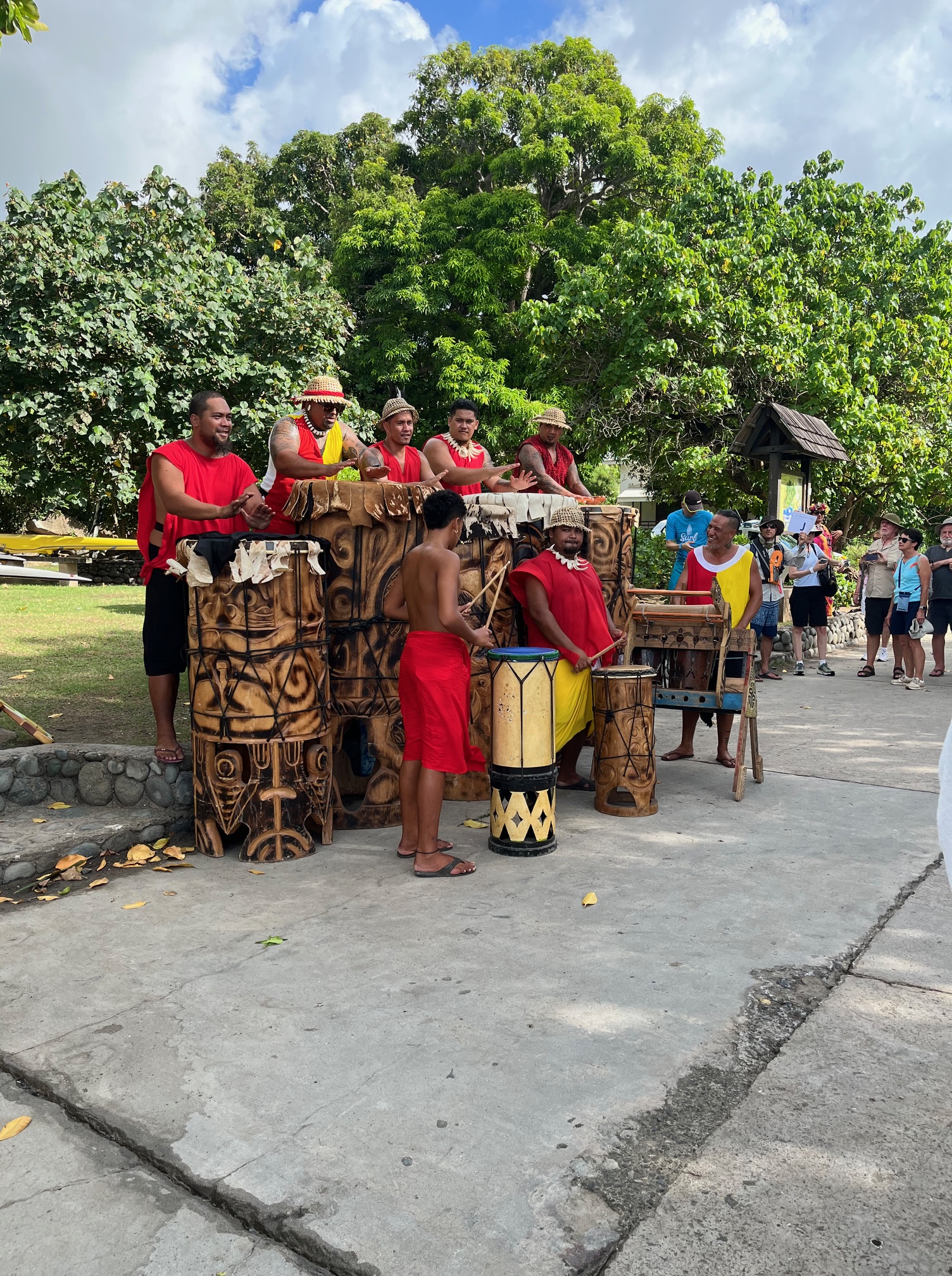
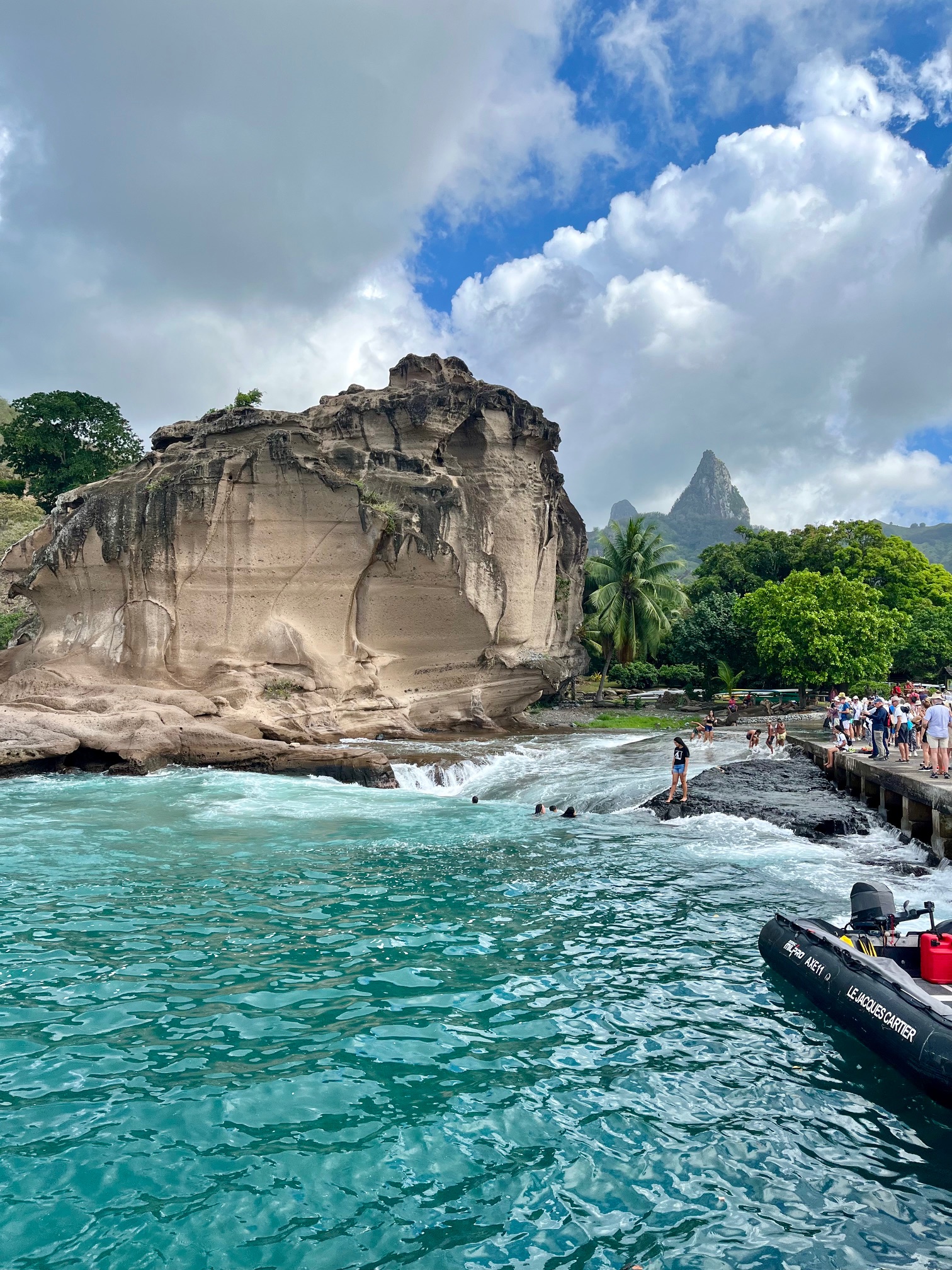
We arrived by zodiac at the local wharf, where we were greeted by the joyful sound of villagers singing and beating tribal drums while their children used the slippery boat ramp to launch themselves into the sea.
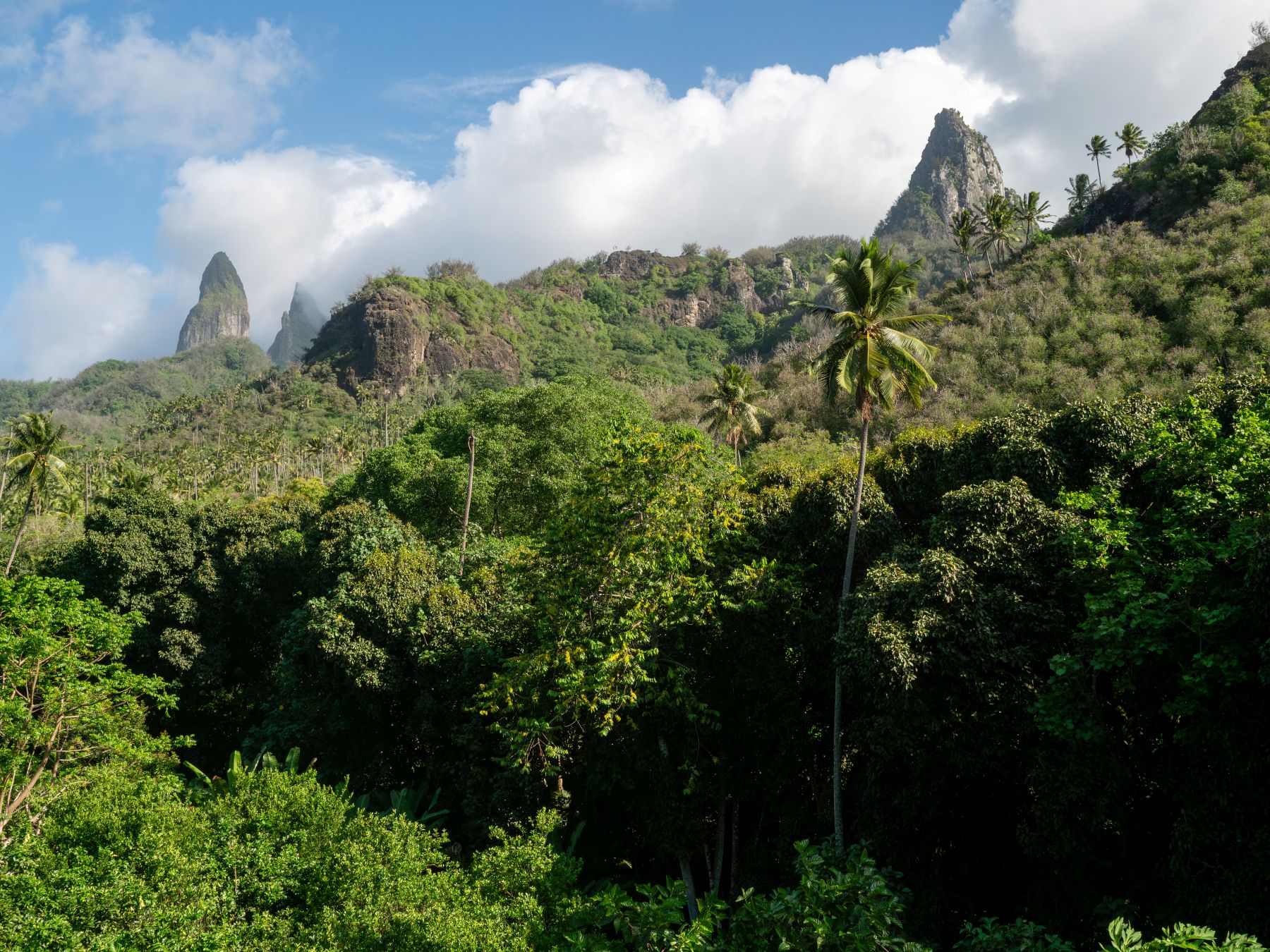
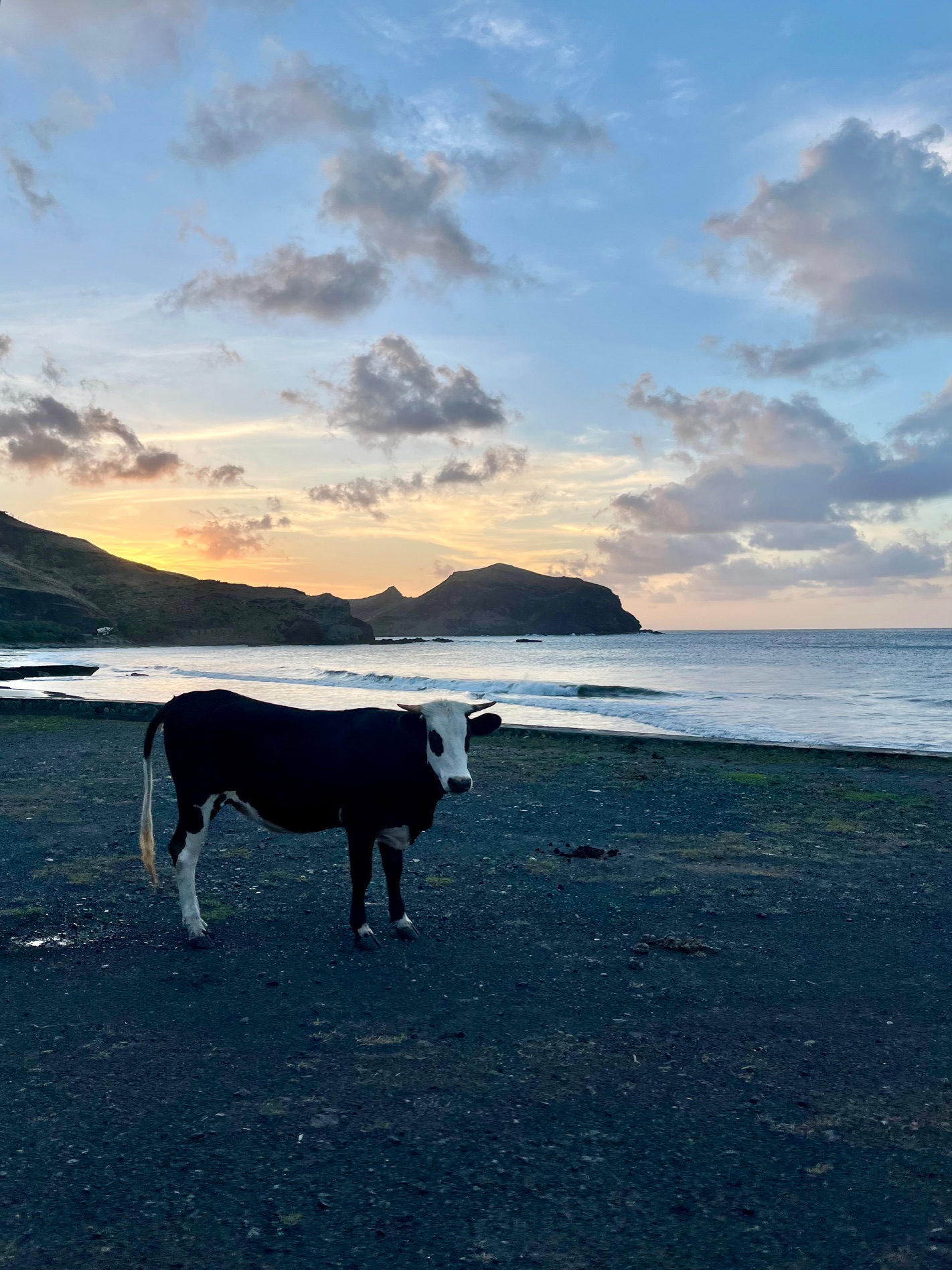
The town of Hakahetau is nestled in a lush, tropical valley with a stunning cluster of sharp mountain pinnacles as its backdrop. We enjoyed a cultural performance and were also entertained by all the roaming wildlife at sunset on our way back to the ship, including pigs, chickens, goats and cows.
The day concluded with villagers performing on stage in the ship’s theatre.
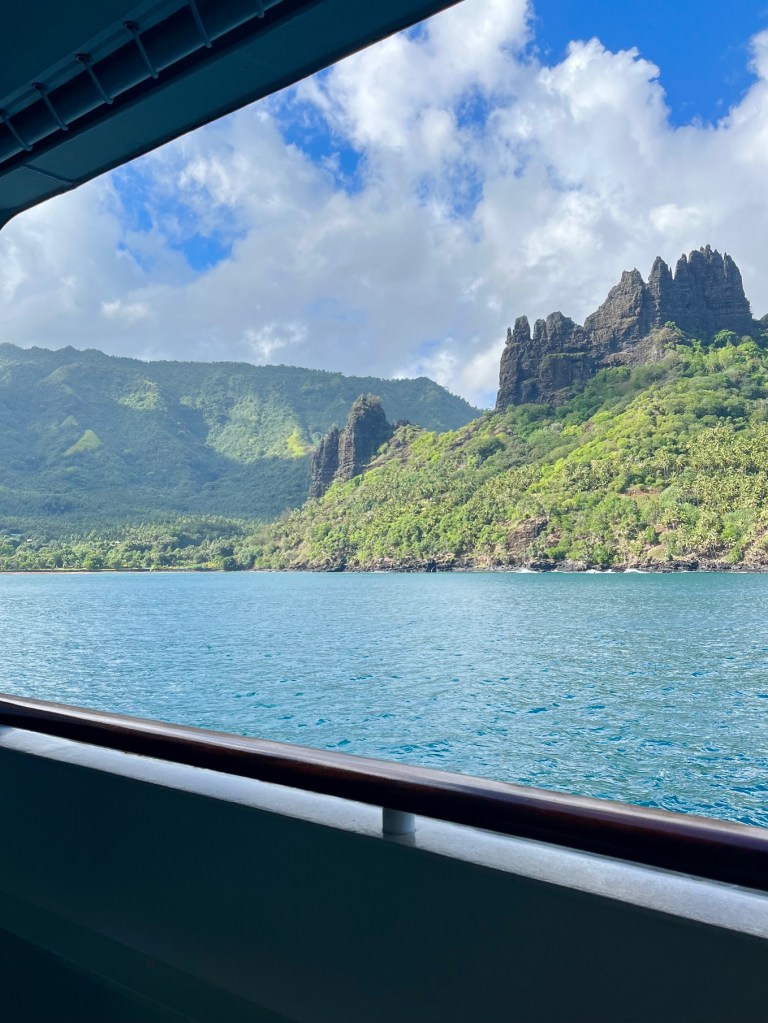
We pulled open our balcony curtains the next morning and were dazzled by this view of Hatiheu Bay, on the northern side of Nuka Hiva island …
Another cavalcade of local vehicles were waiting at the pier to show us the slice of paradise they call home.
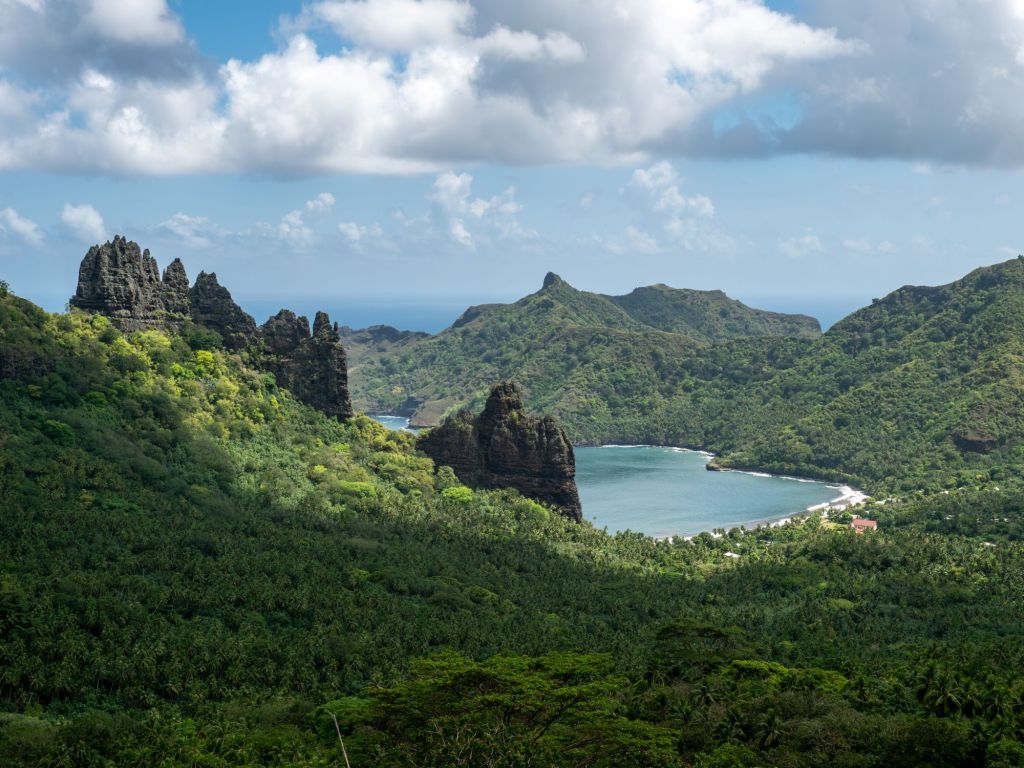
We made numerous stops to admire the stunning views before heading inland to an archaeological site featuring a ceremonial plaza and reconstructed traditional houses.
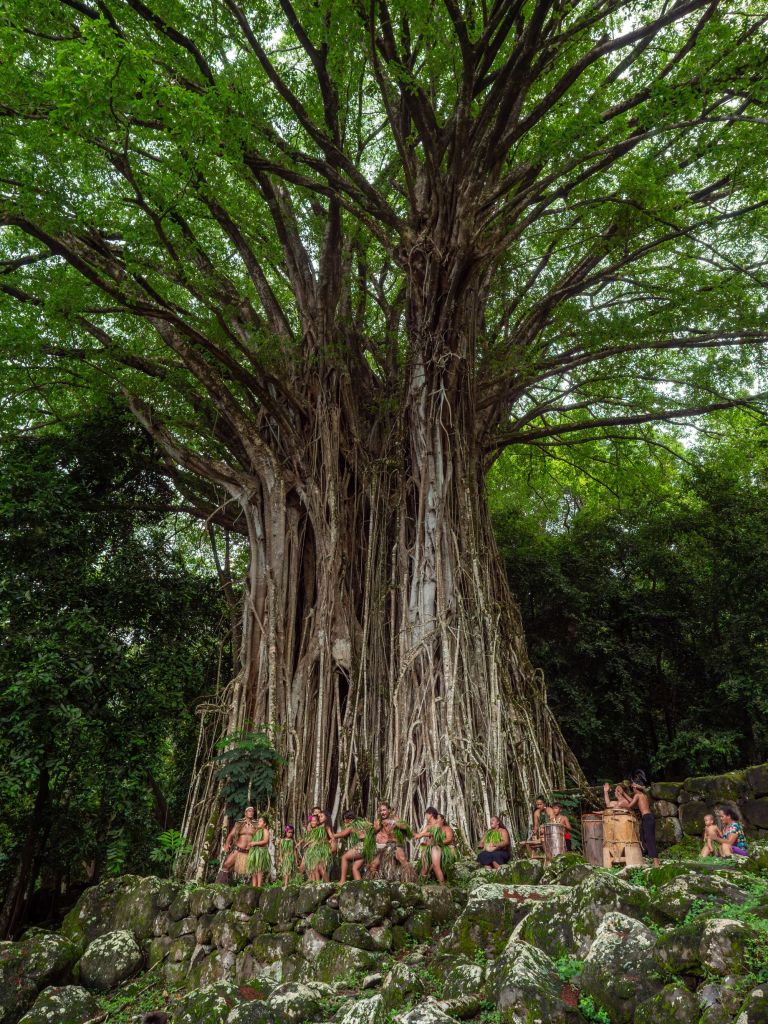
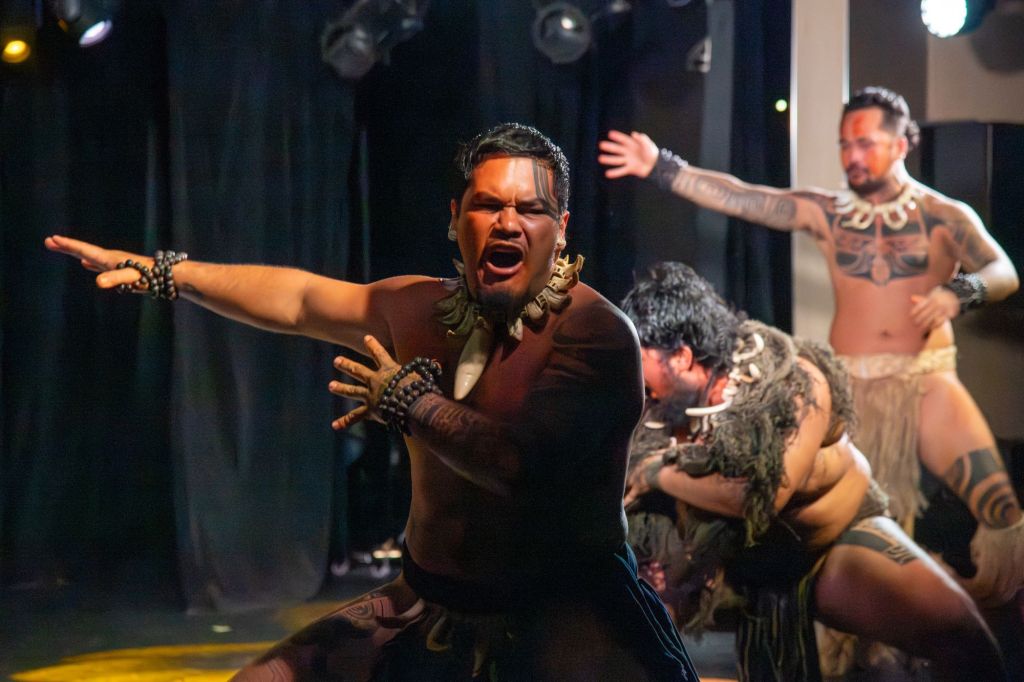
The tour concluded with villagers performing on an ancient stone stage beneath a massive banyan tree, one of the many cultural highlights of the cruise.
The performers were invited aboard the ship afterwards for lunch, with the children having the time of their lives splashing in the pool. Impromptu dance and singing sessions followed throughout the afternoon, which we loved.
We woke to pouring rain on day eight of our cruise when we arrived at the capital of the Marquesas Islands, Taiohae.
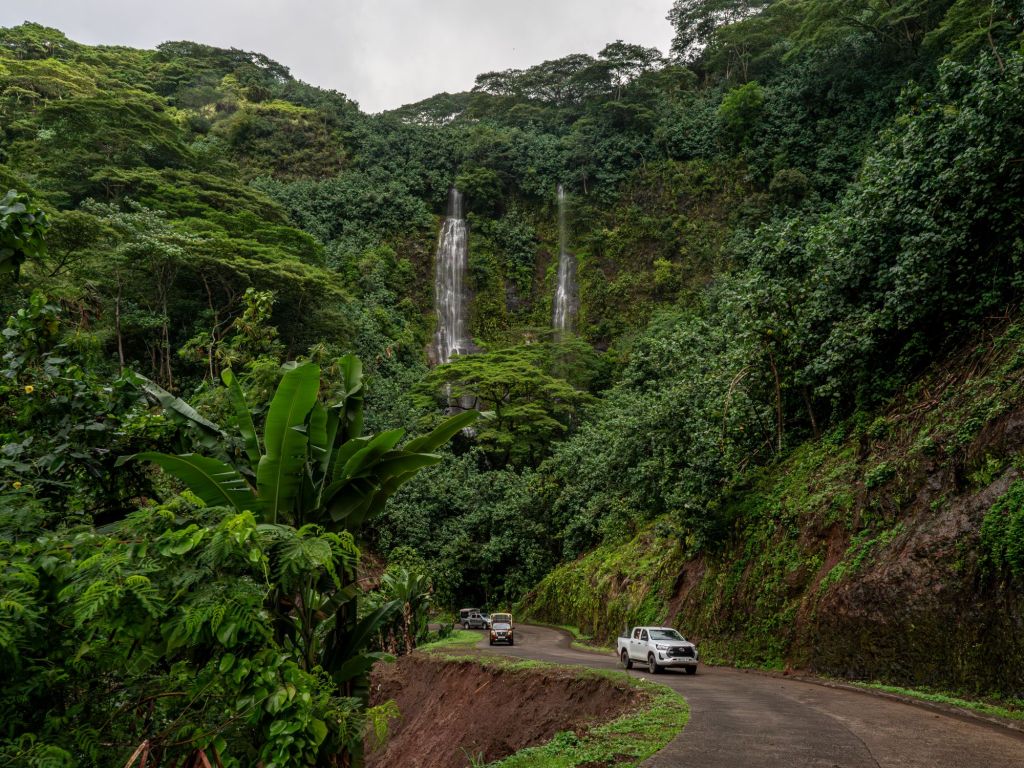
While the sky was grey and cloudy, the views were still spectacular – verdant peaks shrouded in mist, with waterfalls cascading down the hillsides. We went on another jeep tour, winding through the hills and dodging the various horses, roosters and dogs standing insouciantly beside (and sometimes on) the roads.
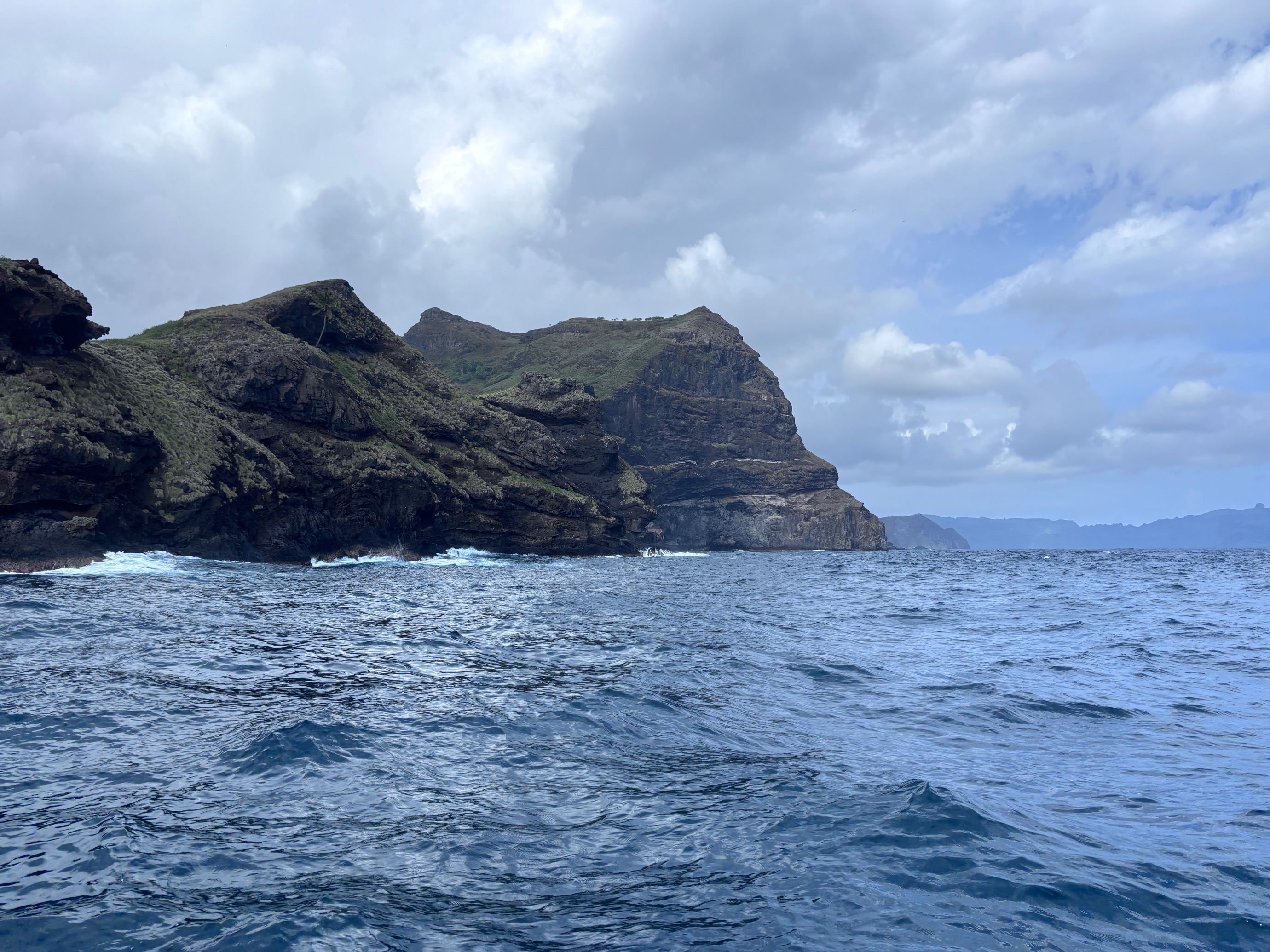
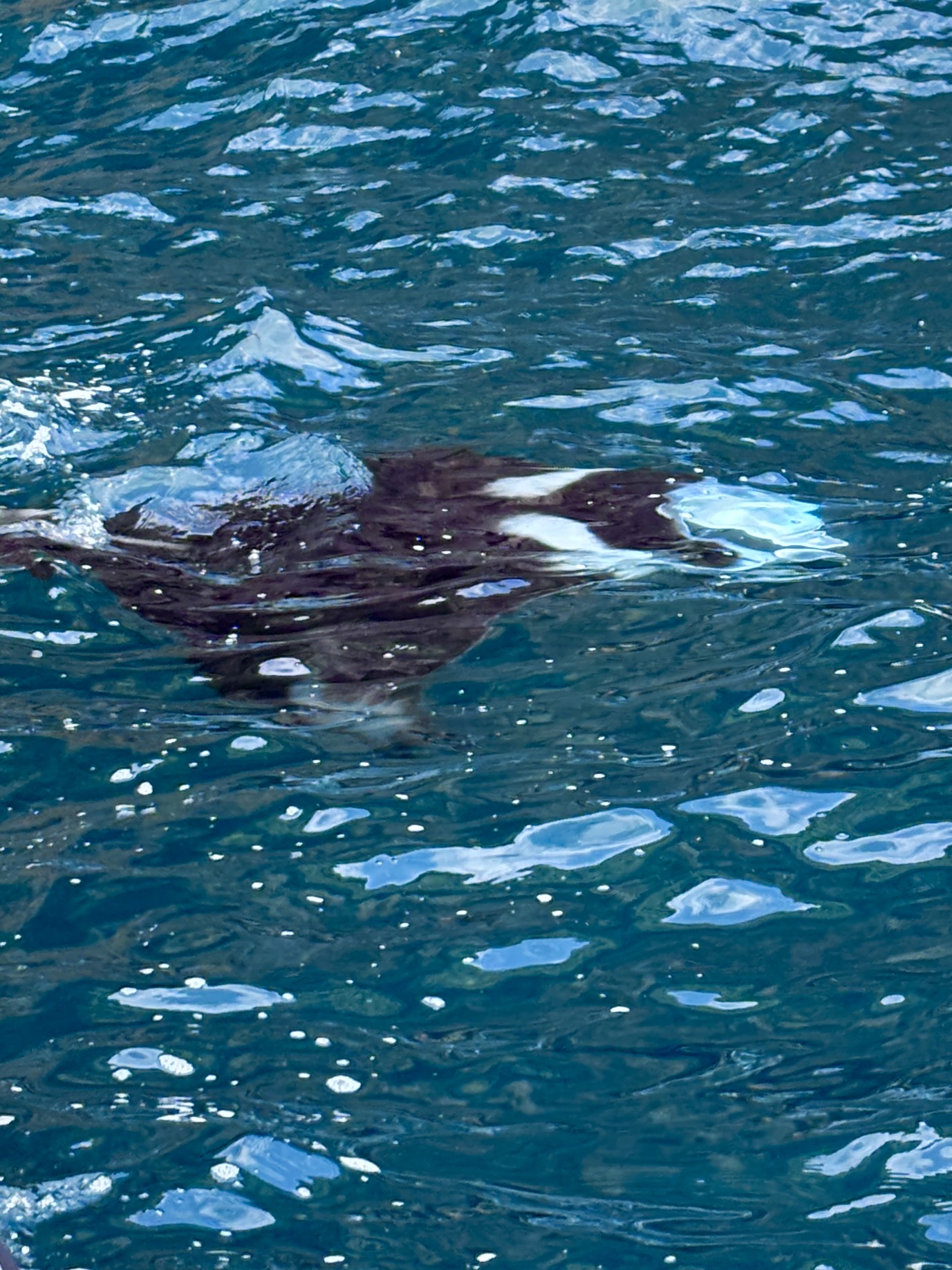
In the afternoon, we climbed into zodiacs and zoomed along the edge of the caldera (the island was formed by a collapsed volcano) to watch manta rays feeding. It was magical to see them glide around our zodiac, scooping up plankton with their wide mouths, but they were a little tricky to photograph while we were bobbing around in the swell.
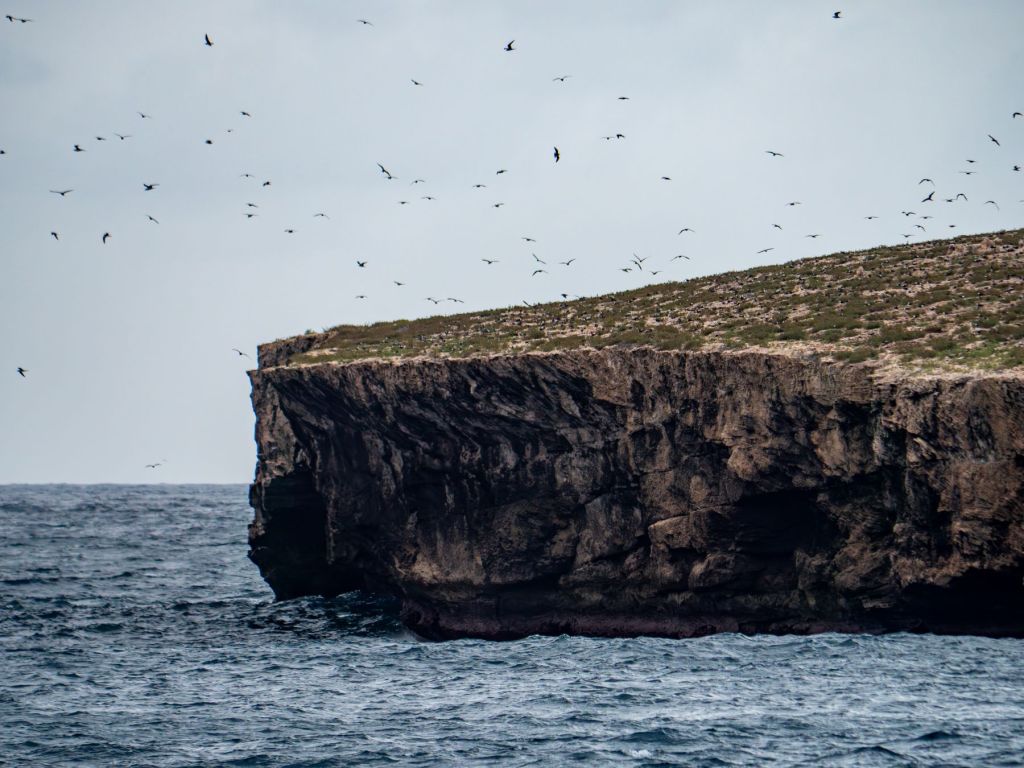
The next morning we arrived at Ua Huka, an island rarely visited by cruise ships. Sadly, the waves were too high for us to disembark, so we anchored behind the coastal islets (motus) of Hemeni and Teuaua to observe nesting habitats for 10 species of seabirds, including thousands of white terns and sooty terns.
Our wonderful Marquesan guide aboard the ship was heartbroken that we couldn’t explore Ua Huka, as it is her ancestral home. The island promised to be fascinating – its highlights include four museums and the Papuakeikaha Arboretum, a collection of more than a thousand species of citrus fruit trees from all over the world.
Instead we detoured to a rarely visited village on the island of Hiva Oa called Hanaiapa for a relaxed afternoon exploring its sleepy streets.
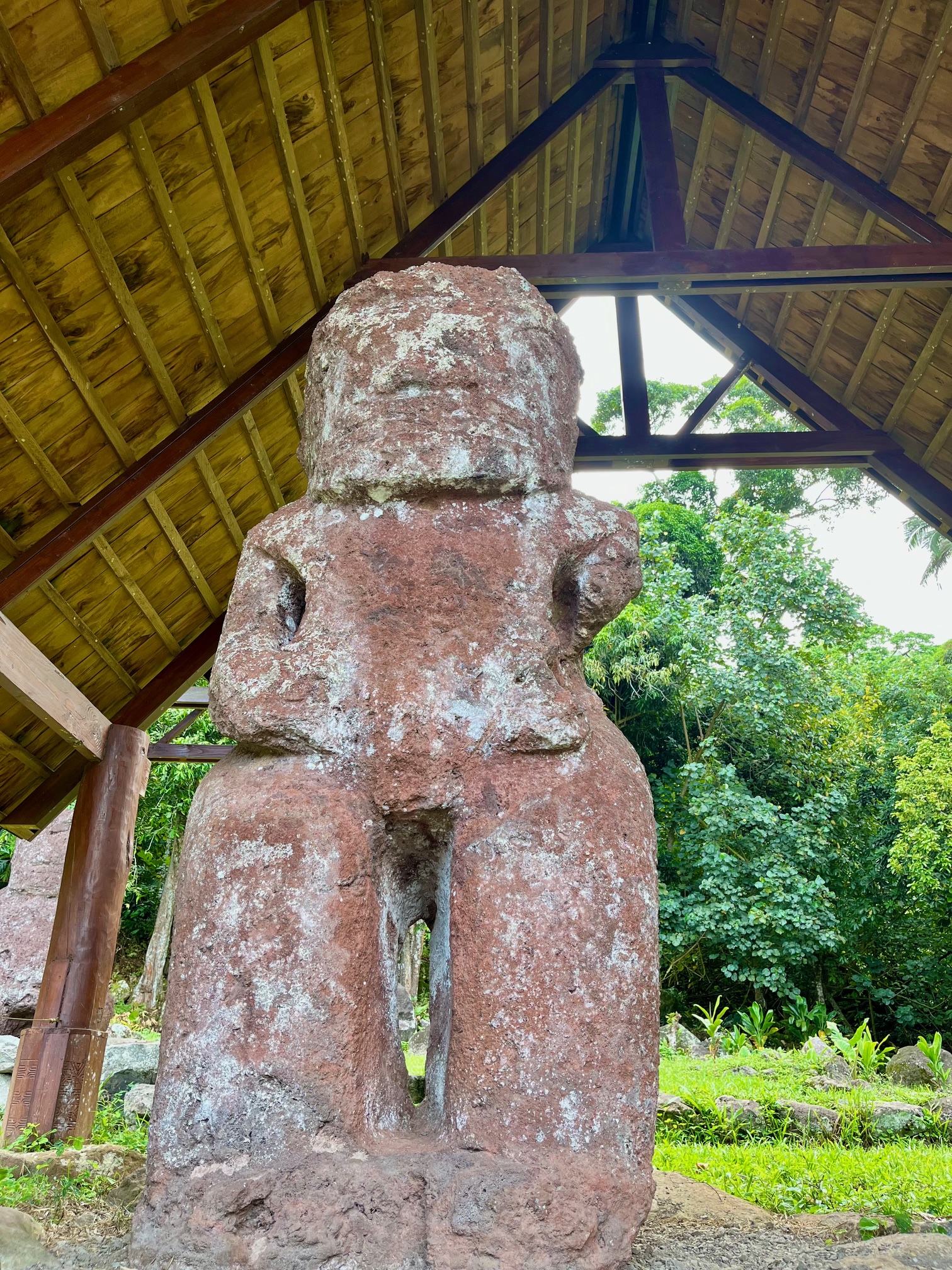
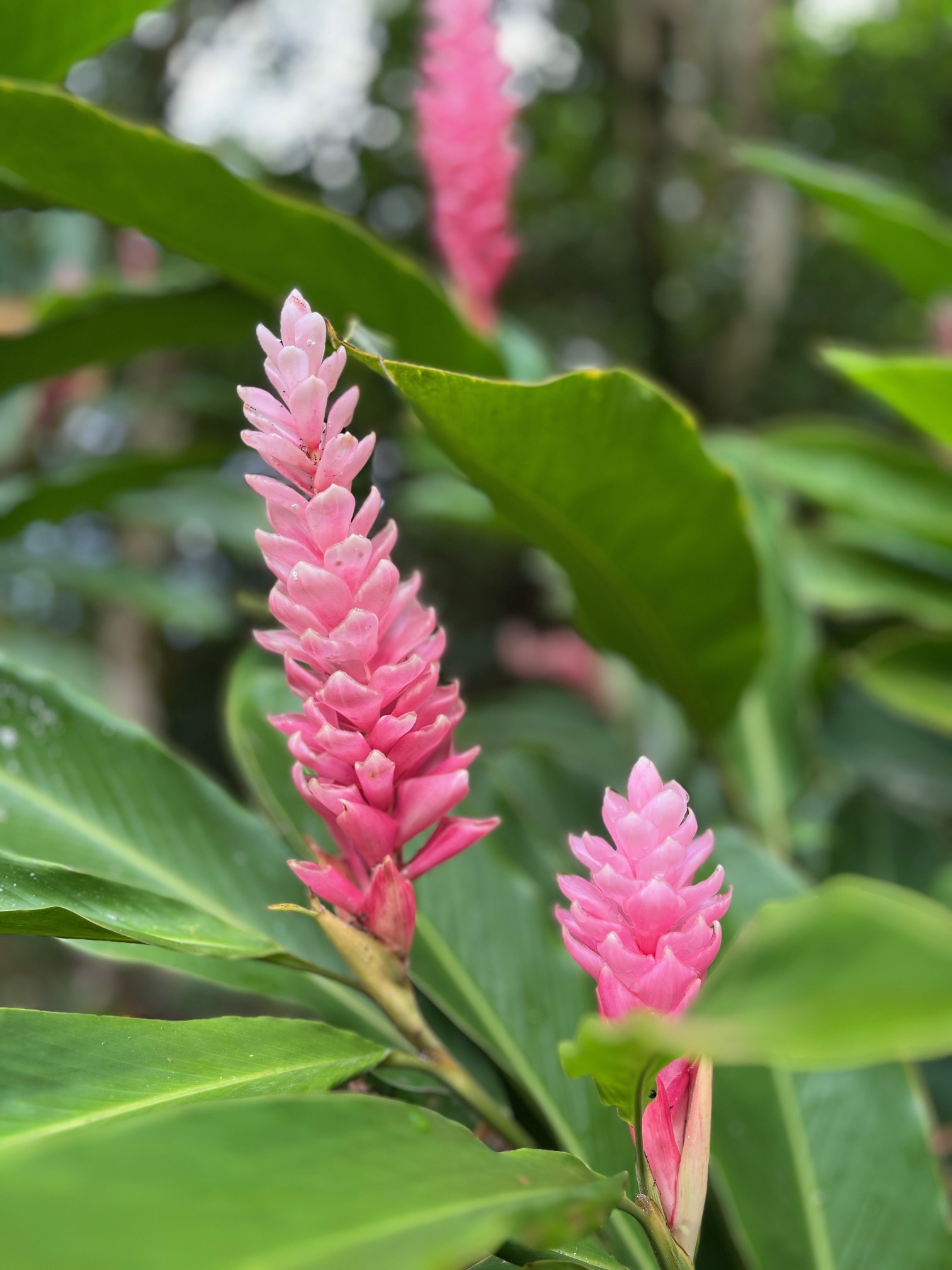
The next morning the ship’s zodiacs took us to Puama’u wharf on the other side of Hiva Oa, where a fleet of jeeps were waiting to drive us to a valley featuring an archaeological site famed for being home to the largest tiki in the Marquesas, an imposing statue carved from red lava rock.
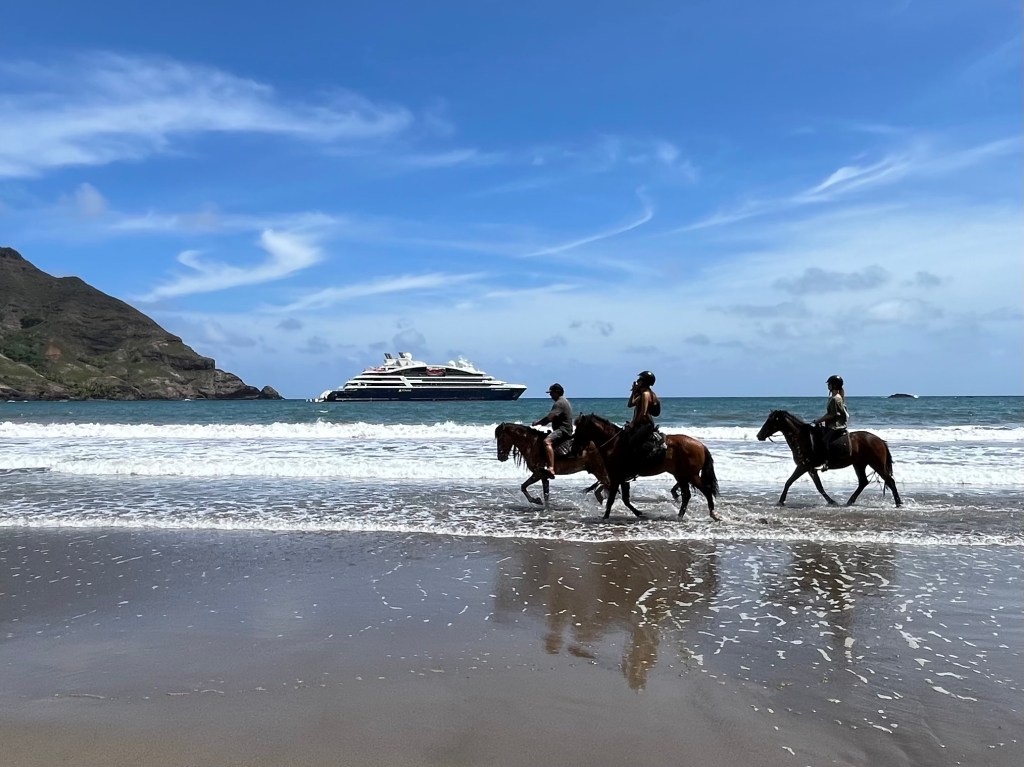
As we returned to the beach, several crew members from Le Jacques Cartier trotted past us on horseback along the black sand, taking a well-earned break from their daily duties.
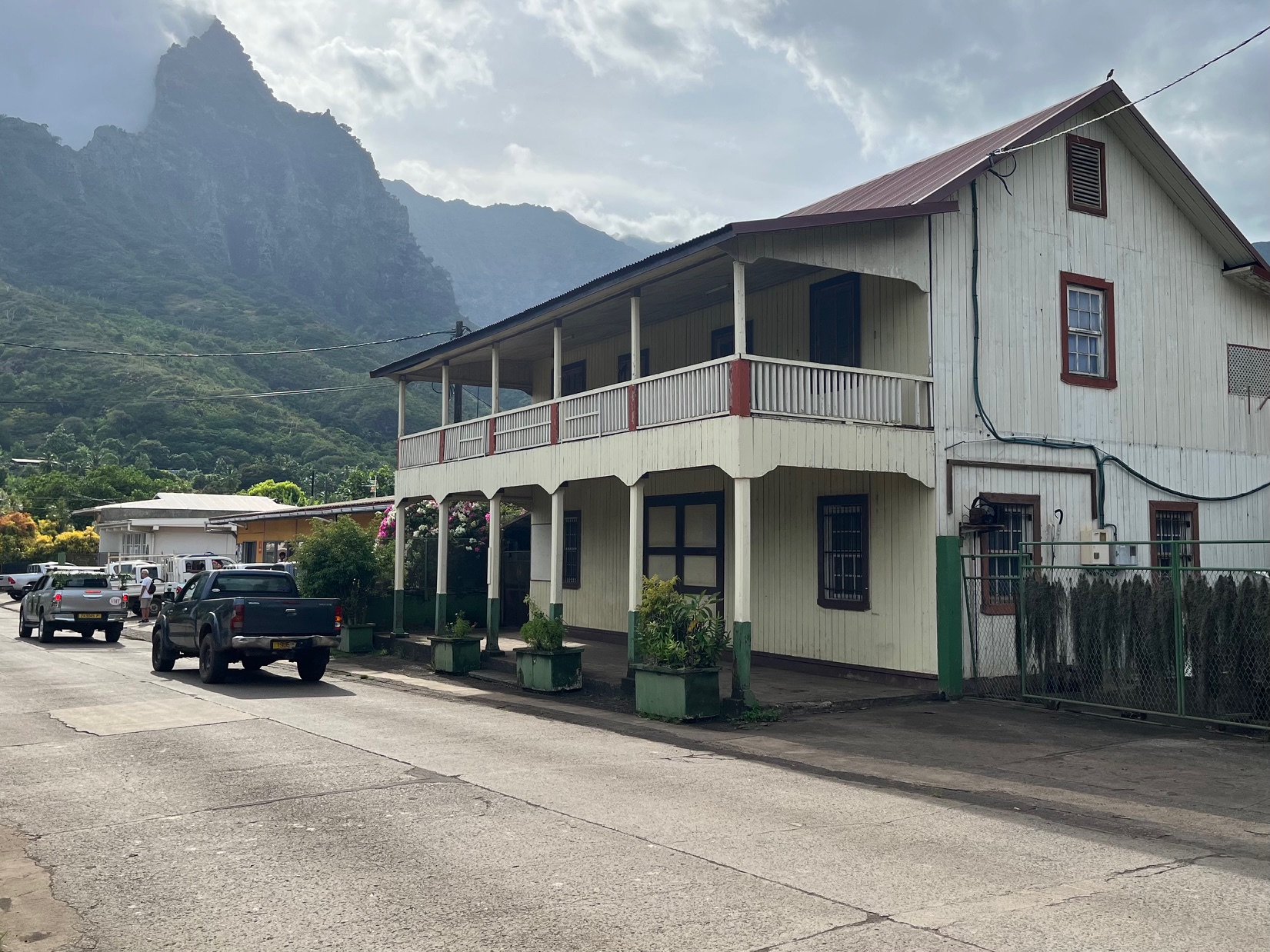
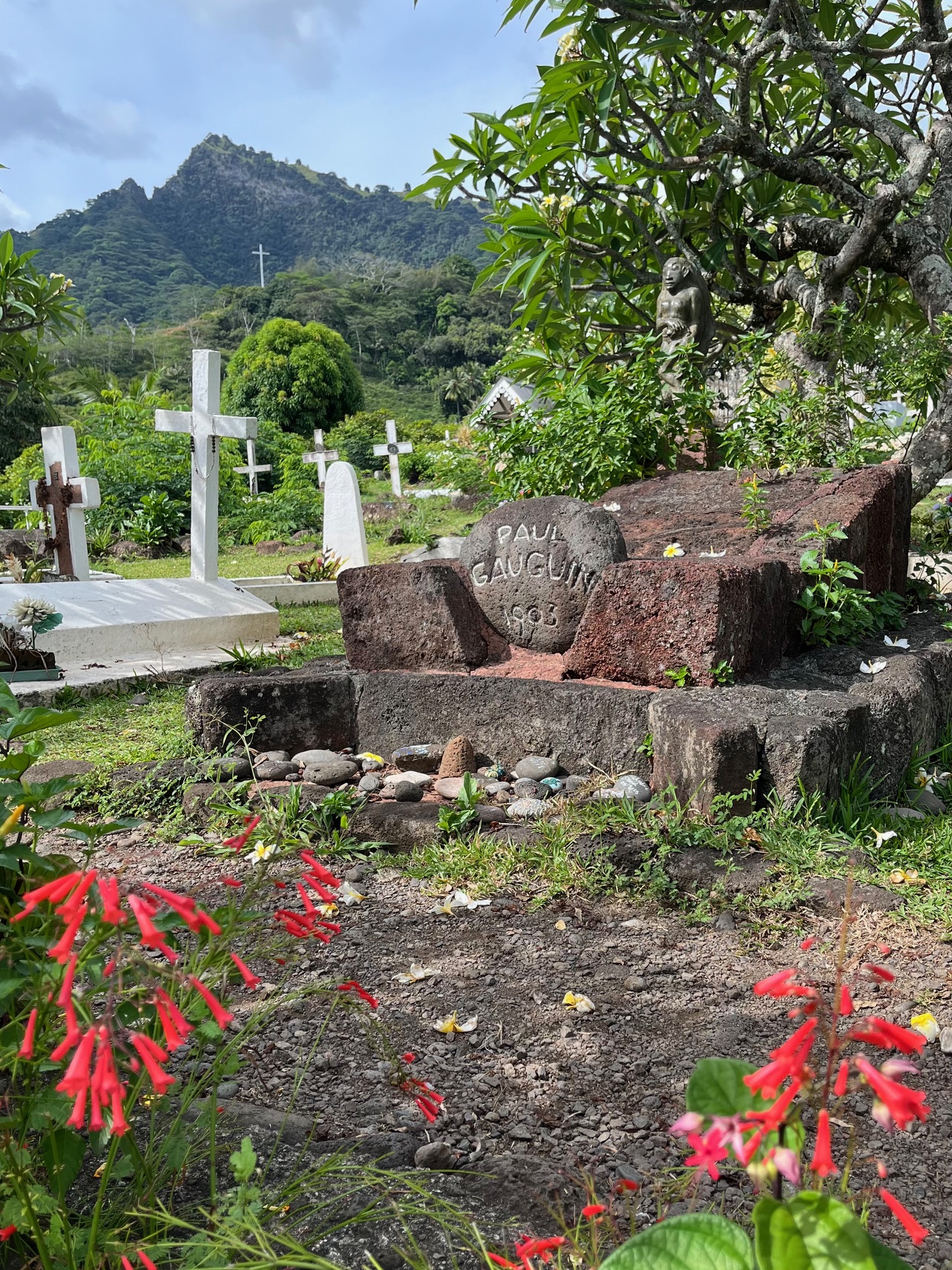
Soon afterwards, the ship set sail bound for the town of Atuona, home of the Paul Gauguin Cultural Centre and Jacques Brel Cultural Space. Gauguin and Brel, both European artists, fled the pressures of fame and society to spend their final years in Atuona, where they are now buried just metres apart.
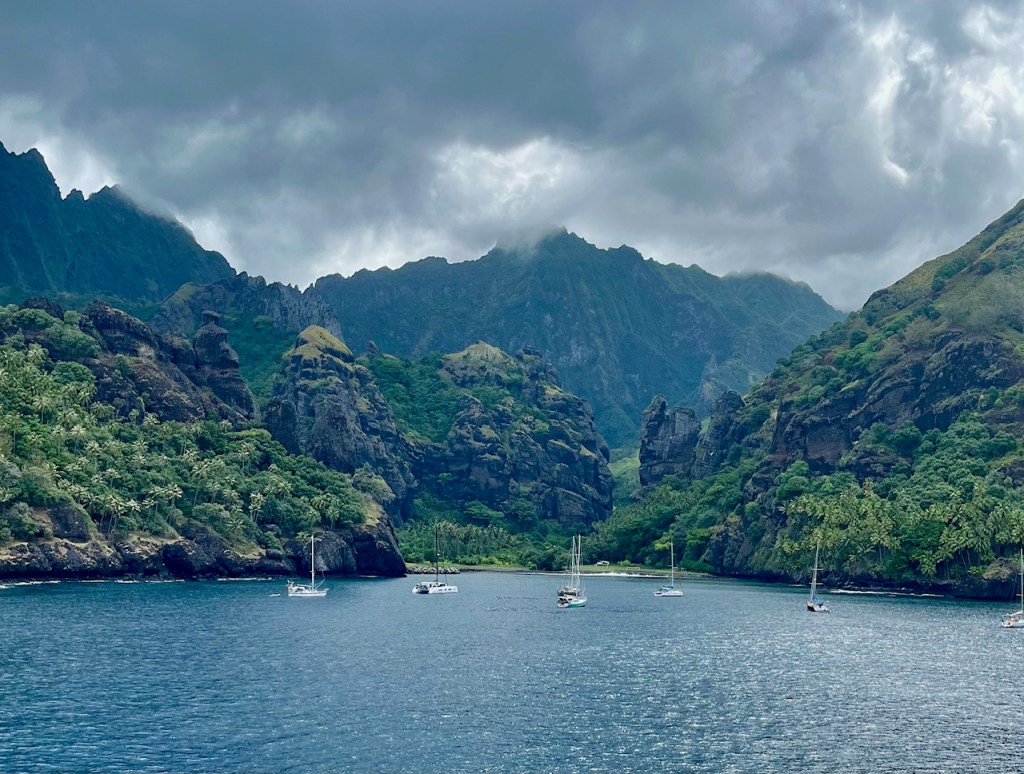
Our favourite stop of the cruise came on day 12 when we dropped anchor in the Bay of Virgins at Fatu Hiva island.
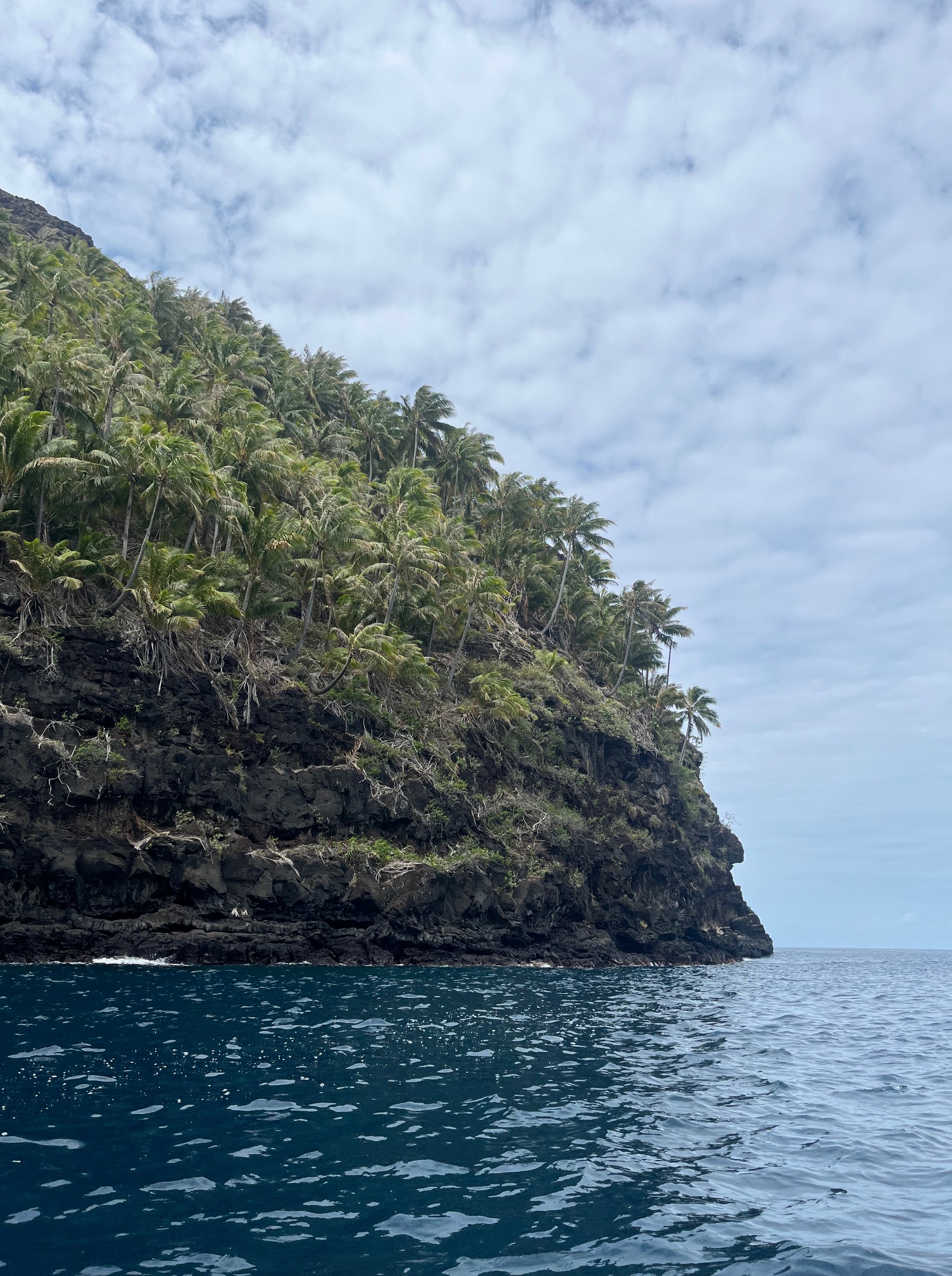
Fatu Hiva was so beautiful it literally took our breath away. The most southern island in the Marquesas is dominated by rugged basalt calderas, mountain rainforests, steep cliffs and peaks rising over 1000 metres.
It’s home to just 600 residents who live in two villages—Omoa to the south and Hanavave to the north. The island has no airstrip and is only accessible via boat, which has preserved it from the impact of mass tourism.
We started the day with a zodiac cruise where each new cove brought another gasp of amazement at the incredible vistas.
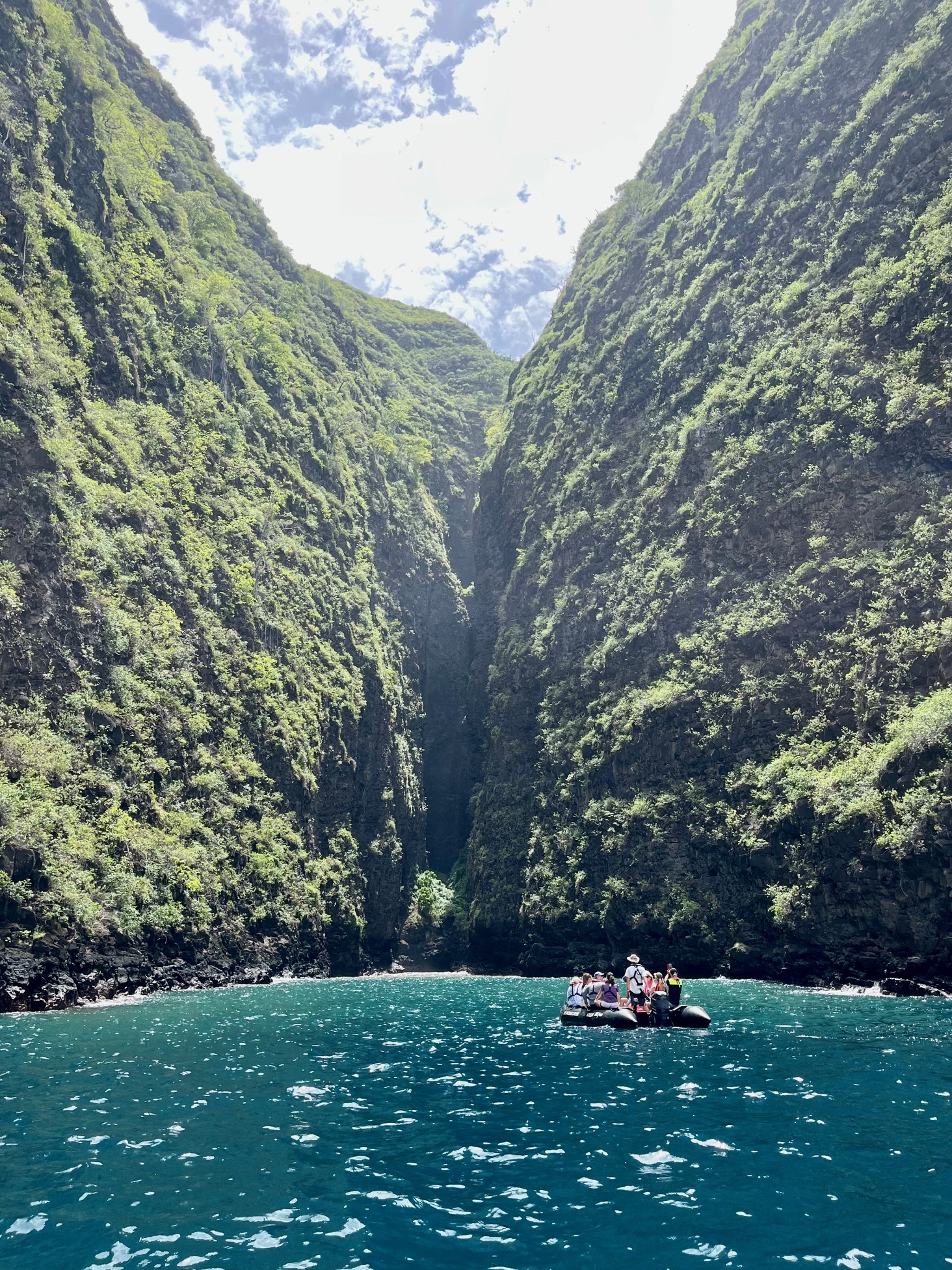
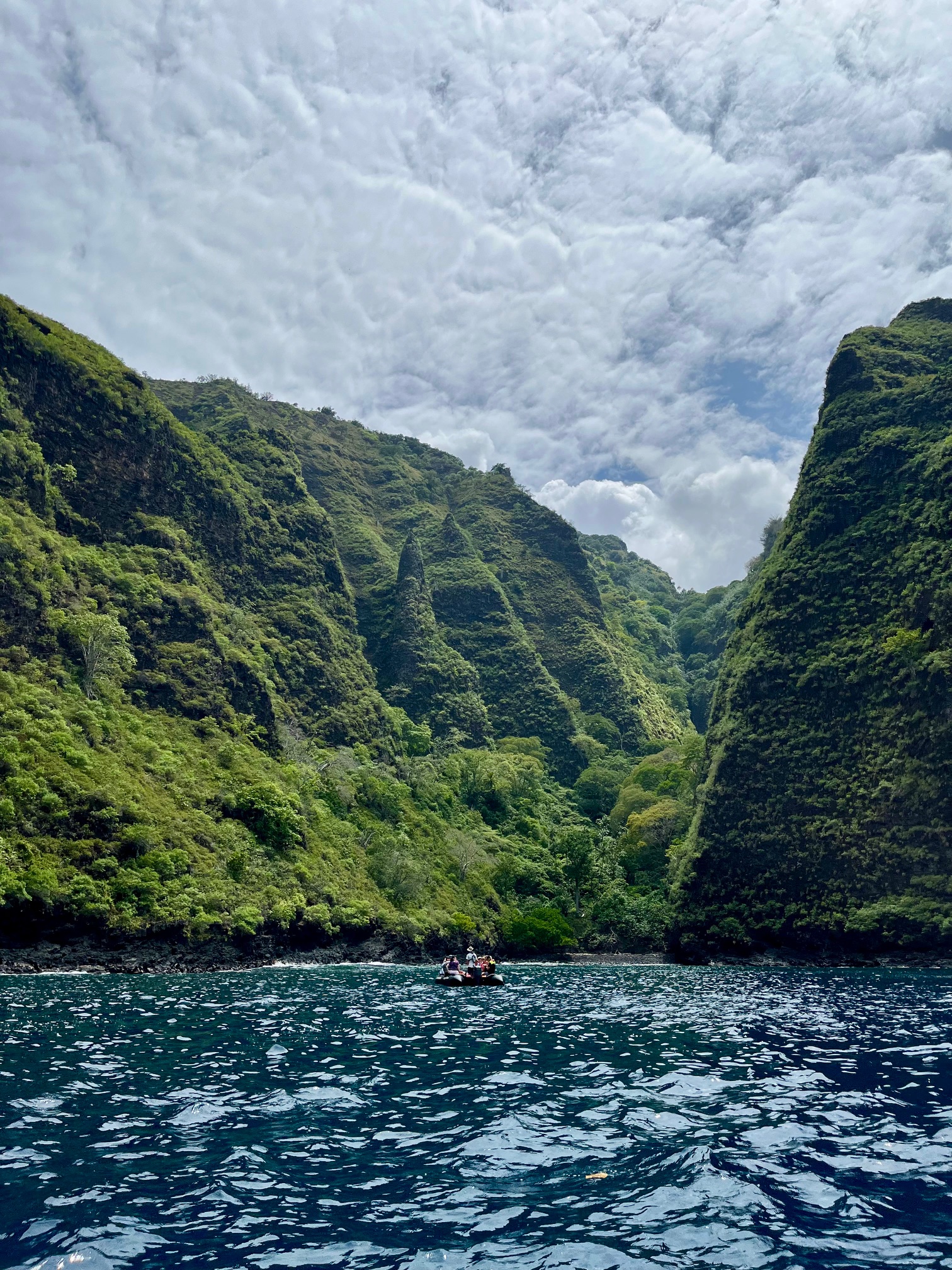
The verdant cliffs felt like something from prehistoric times. We half expected a brontosaurus to pop its head up at any moment.
Just when we thought the morning couldn’t get any more memorable, word crackled over the zodiac driver’s walkie-talkie that a pod of spinner dolphins had been spotted in the next cove. The engine was put into high gear and we powered over to the action.
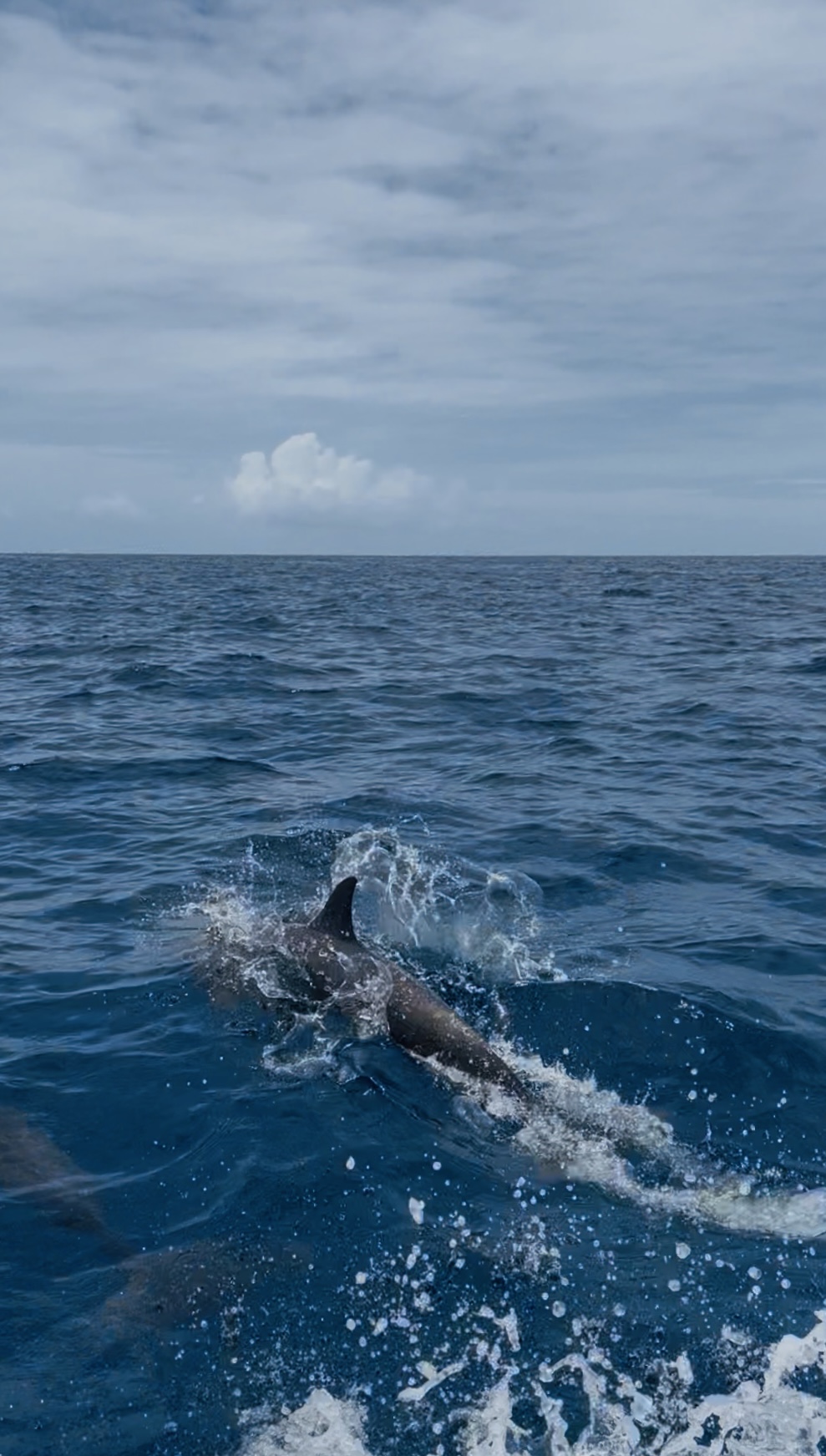
The dolphins were excited to see us and frolicked around the zodiac, swimming under and around it, then leaping into the air to perform a few of their iconic twirls. The pod stayed with us for around 10 minutes and we could have floated there forever watching them play.
But all too soon it was time to head to the wharf at Hanavave, where we wandered through the lovely little village before arriving at the local hall for a cultural performance. We noticed a little girl with a swollen eye who was dancing with her mother. The expedition crew must have spotted her too and she was whisked to the ship’s doctor for medical attention while we were docked.
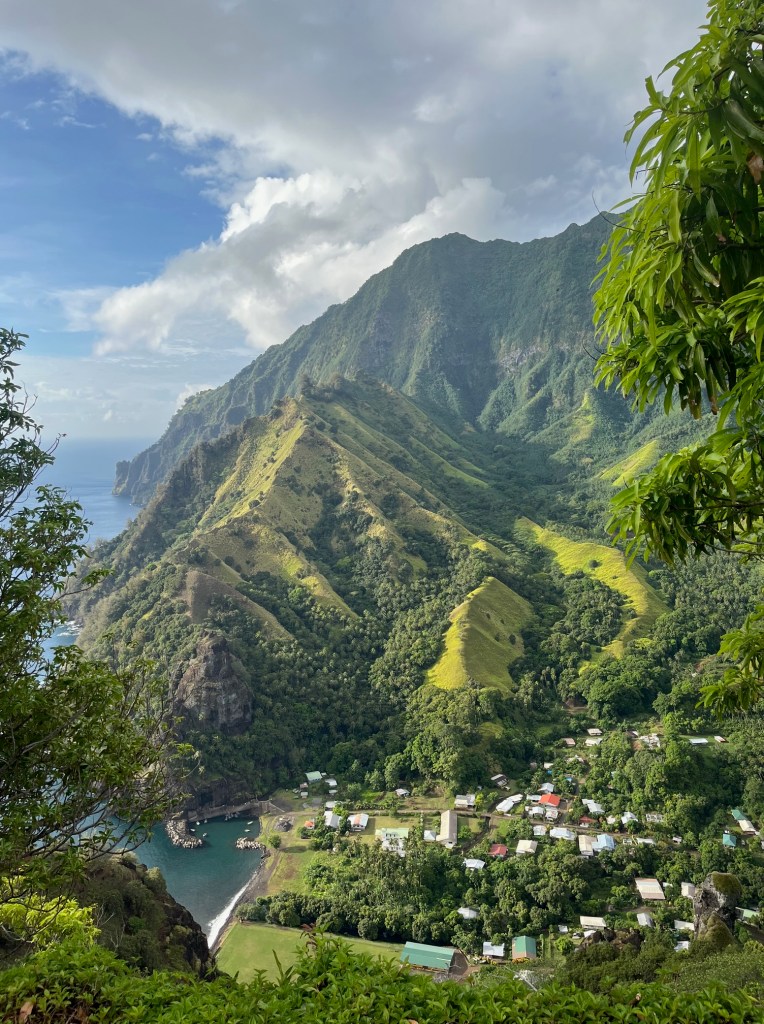
After lunch we were ferried back to the wharf and went on the most stunning jeep ride over the mountains to Omoa.
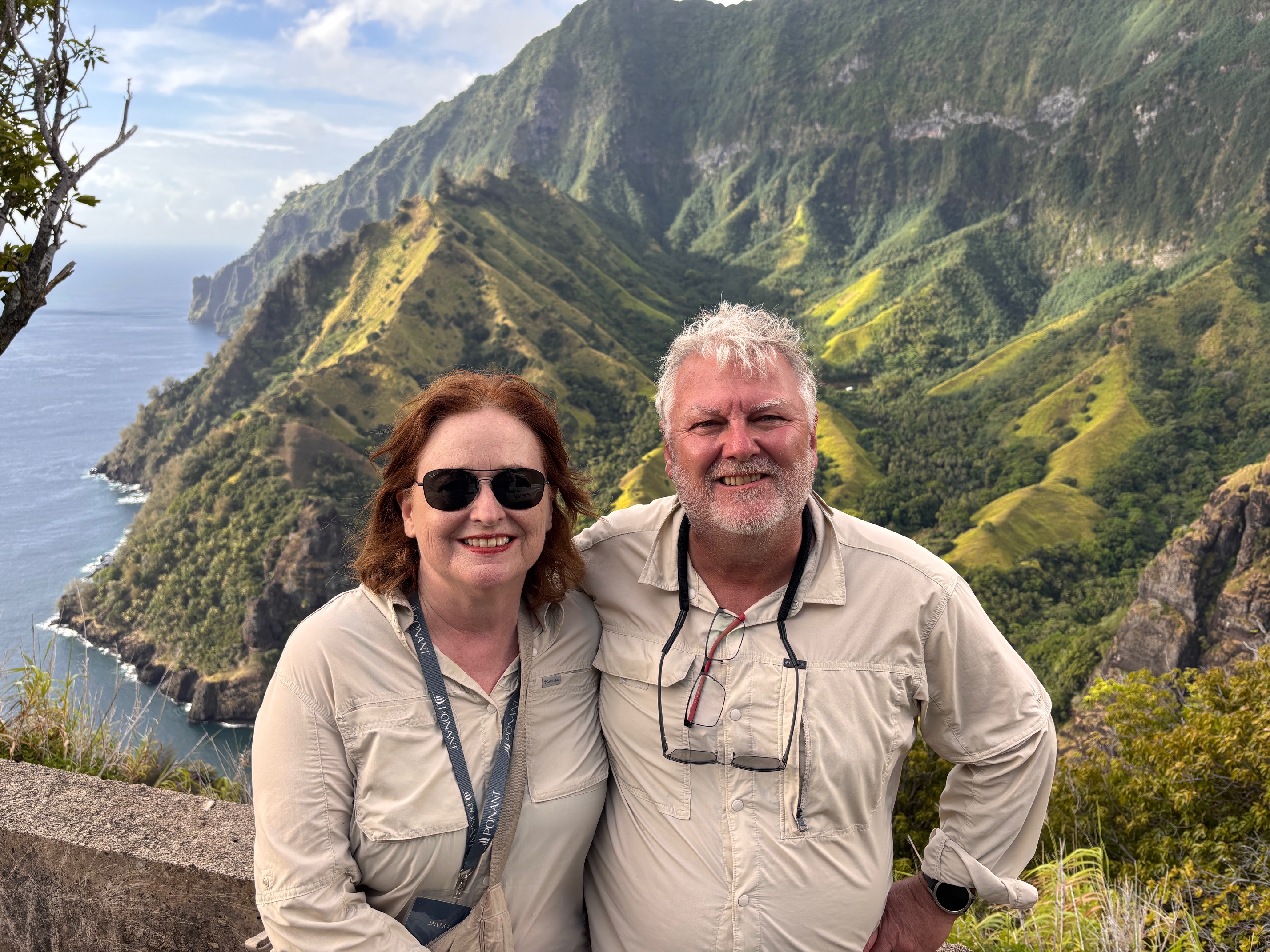
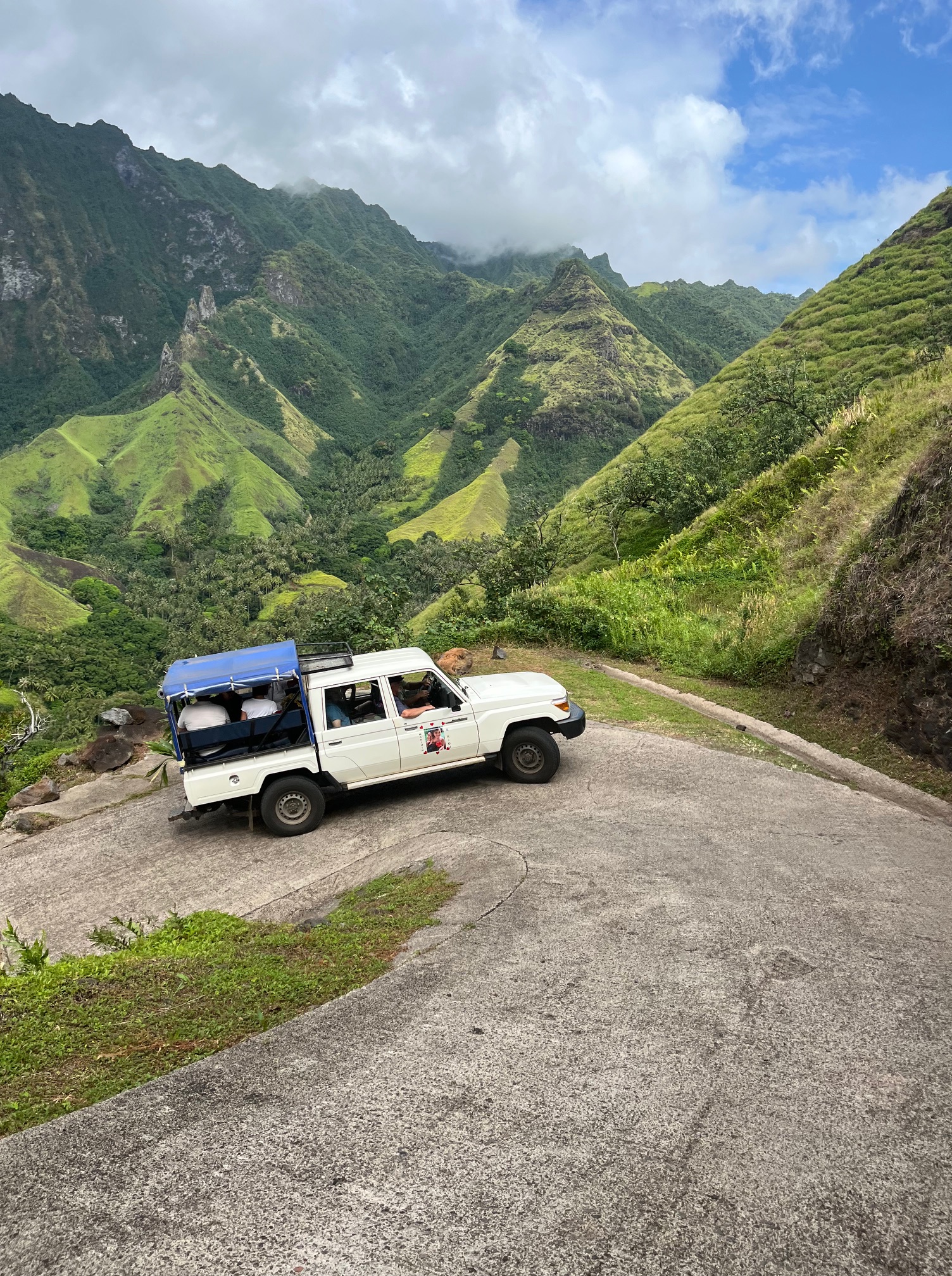
Photos don’t do the interior of Fatu Hiva justice, it was literally one of the most stunning places we’ve ever visited. But navigating the many hairpin turns on its roads was quite something—some of them required three-point turns to negotiate.
Our final stop in the Marquesas archipelago was a little village called Hapatoni on the island of Tahuata. Accessible only by boat, Hapitoni was such a pretty, peaceful step back in time.
We fuelled up with breakfast on deck looking out at the gorgeous island, which had wisps of cloud clinging to its peaks like fairy floss.
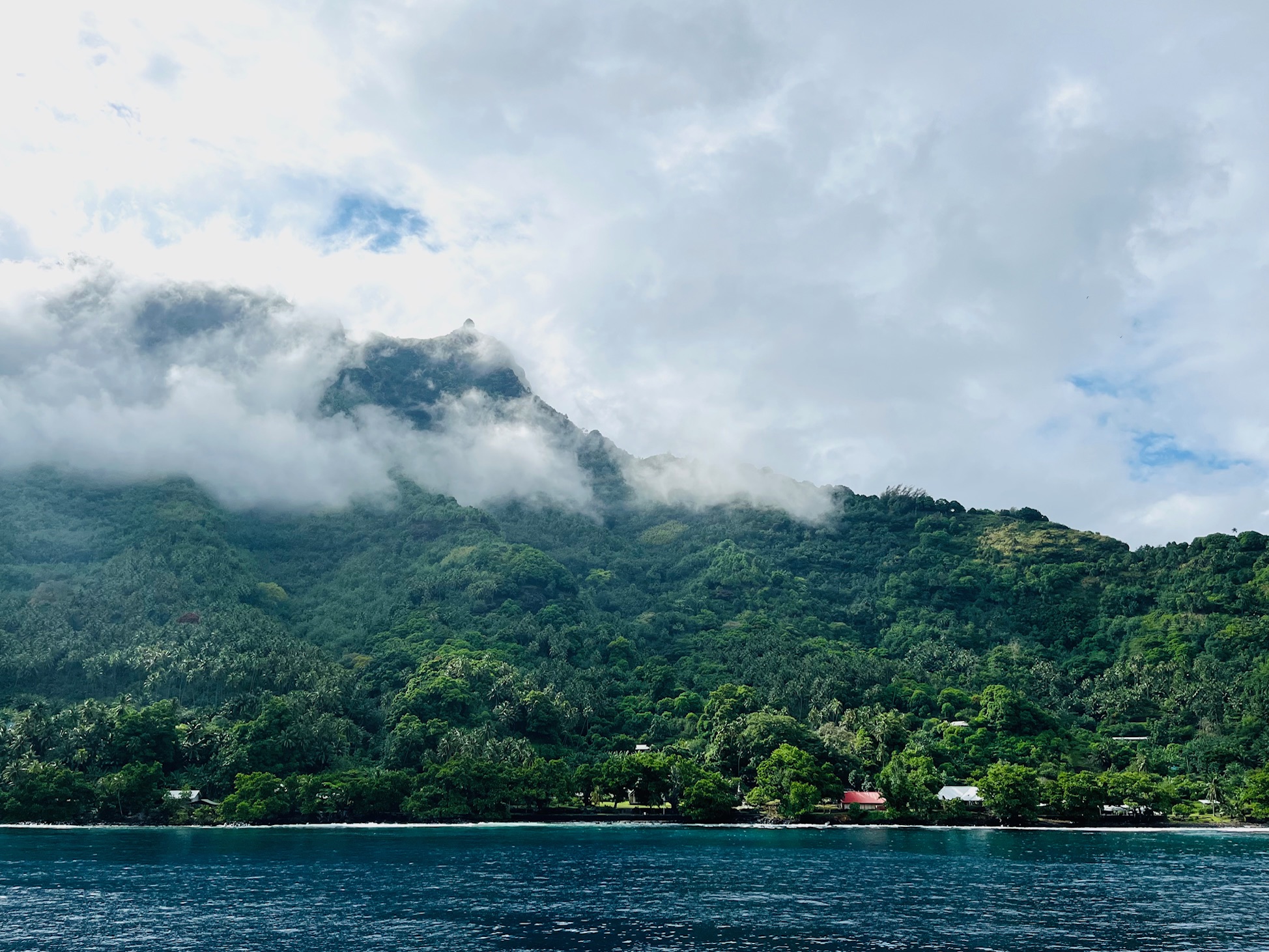
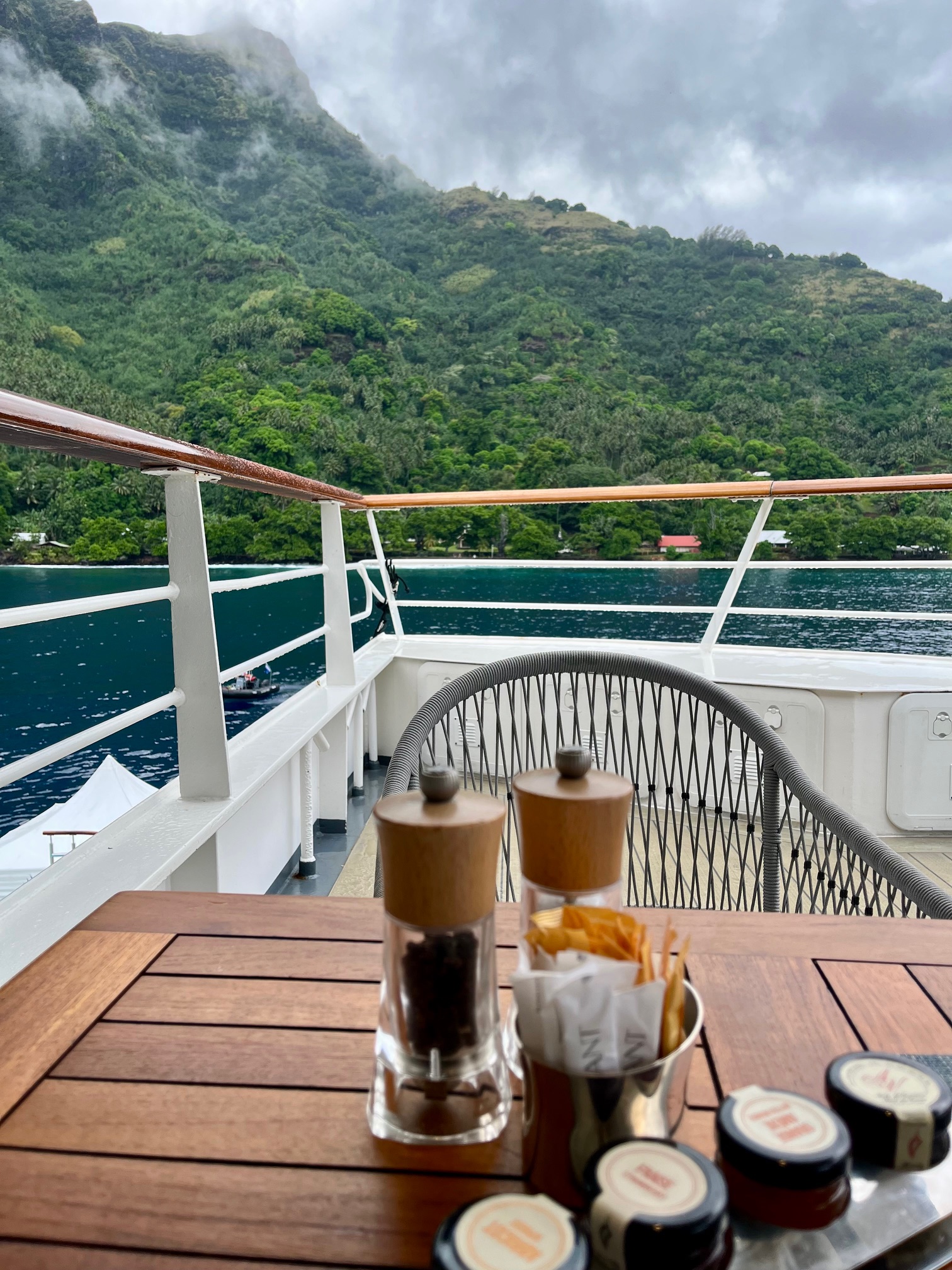
We were greeted on arrival at Hapatoni by performers strumming guitars and beating drums, while local women draping fragrant floral garlands around our necks and tattooed villager stood on a rocky outcrop blowing on a traditional wooden horn.
The town is famous for its stone-paved royal walkway (the Te Ava Nui) constructed in 19th-century, which led us to a pretty Catholic church, built by the Vatican and featuring stained-glass windows and local wood and bone carvings.
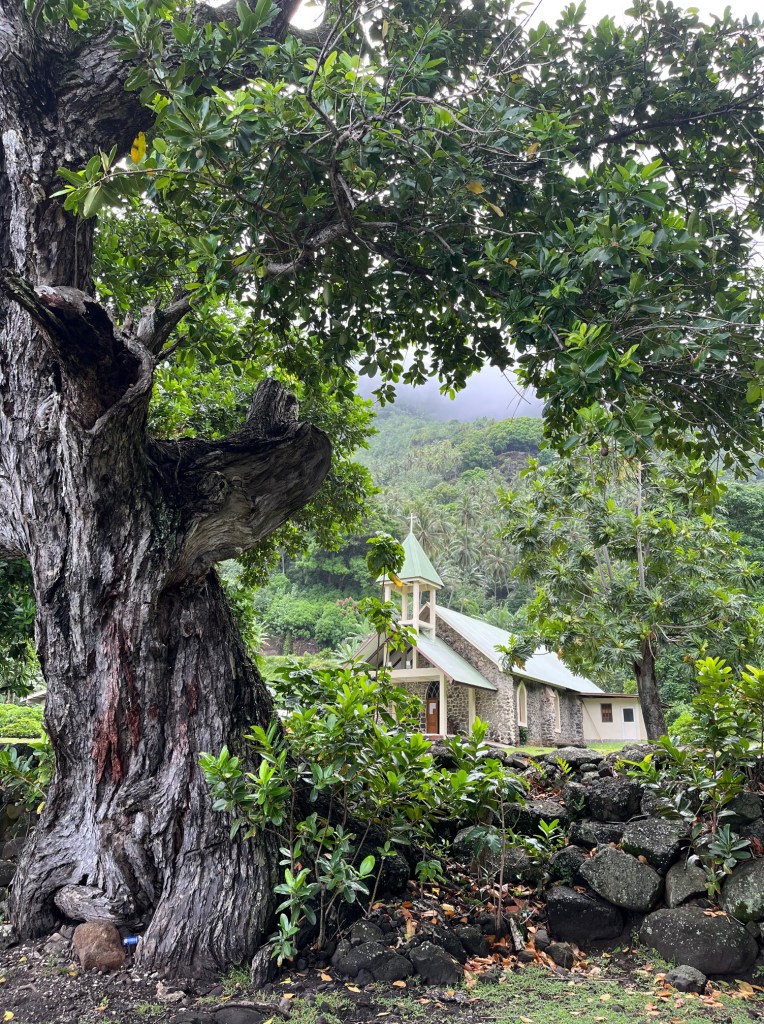
The island is also renowned for its skilled woodcarvers and unique handcrafts made from horse and goat bone, pig tusks and even swordfish bills.
When we arrived back on the ship we plunged into the pool to cool off, before enjoying lunch on deck and soaking up our last view of the Marquesas islands ahead of our 48-hour journey back to the Tuamotu island group.
Our only regret about visiting the Marquesas was that we didn’t have an opportunity for an ocean swim. We’d have loved more time in Nuku Hiva to visit Anaho Bay, which is cited by Tahiti Tourism as being the Marquesas best beach, sheltered from the wind and the ocean waves, with soft white sand. Maybe next time!
That aside, the Marquesas were an untouched, wonderful destination that we feel privileged to have visited. And getting there just became a lot easier, with Air Tahiti Nui announcing direct flights from Sydney to Papeete from December 2026.
Photography: Alana House and Studio PONANT.

